
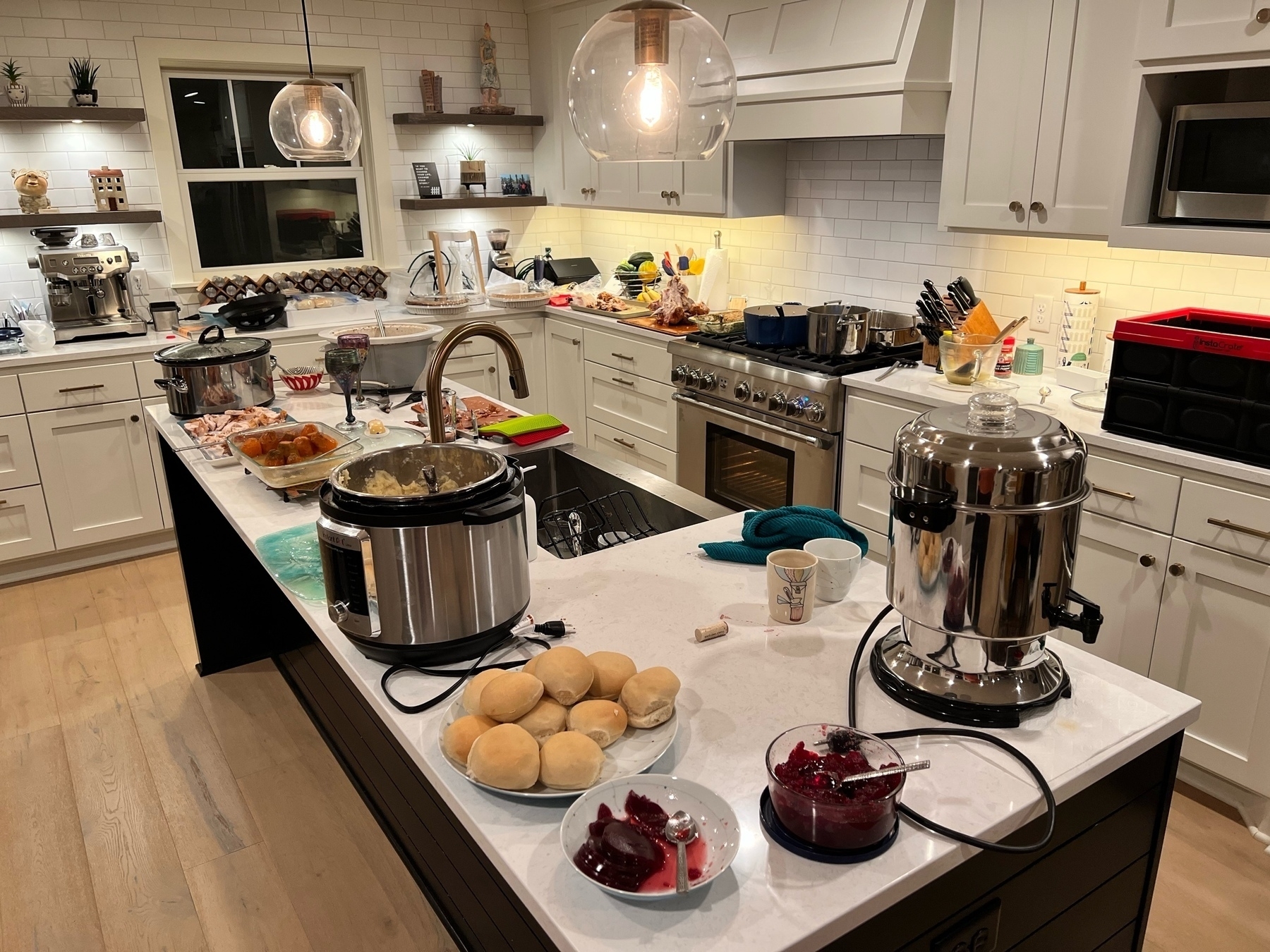
Thanksgiving 2021 scene of the crime. 🚨
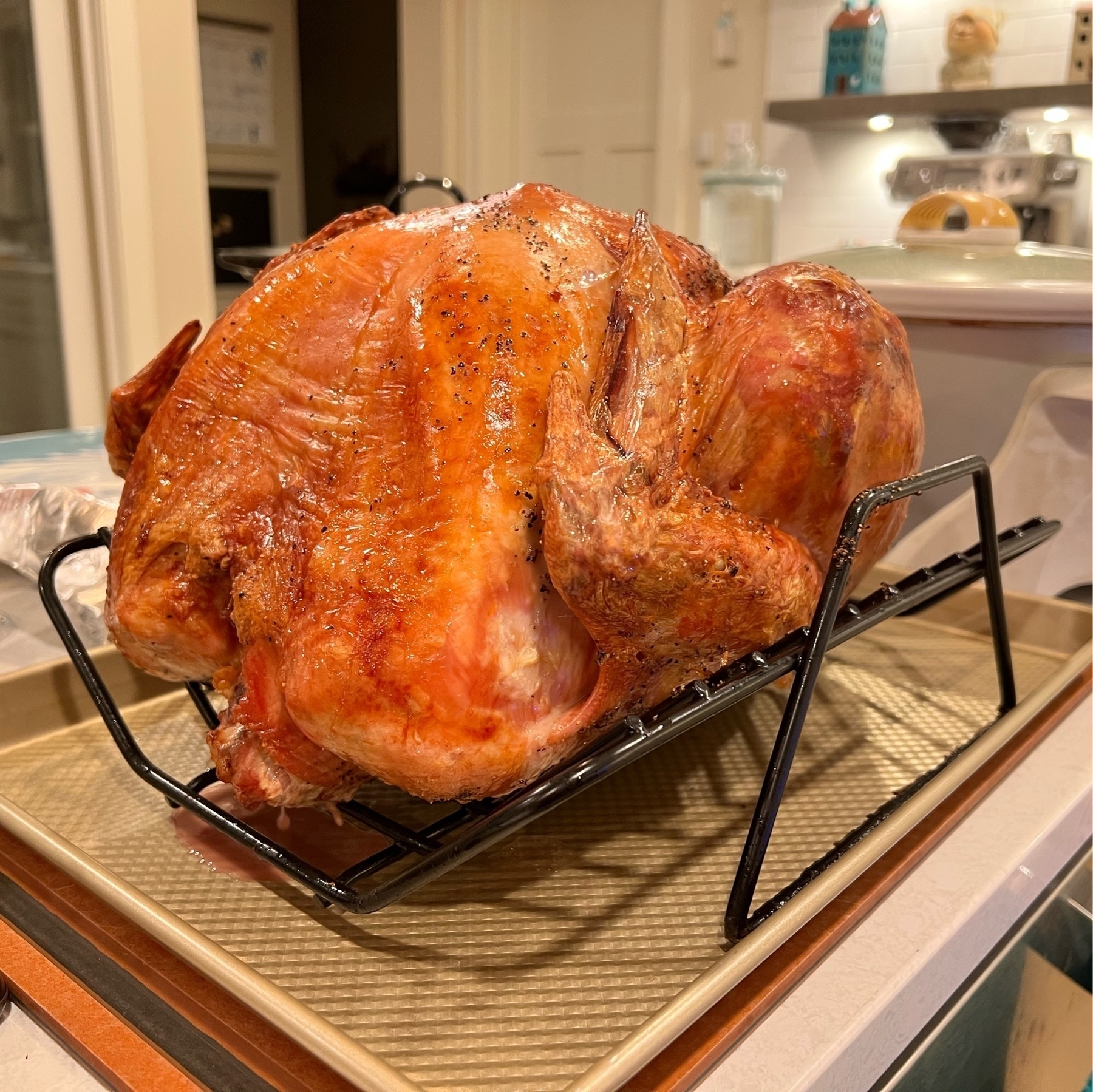
Thanksgiving Turkey out of the oven. Now for the rest.
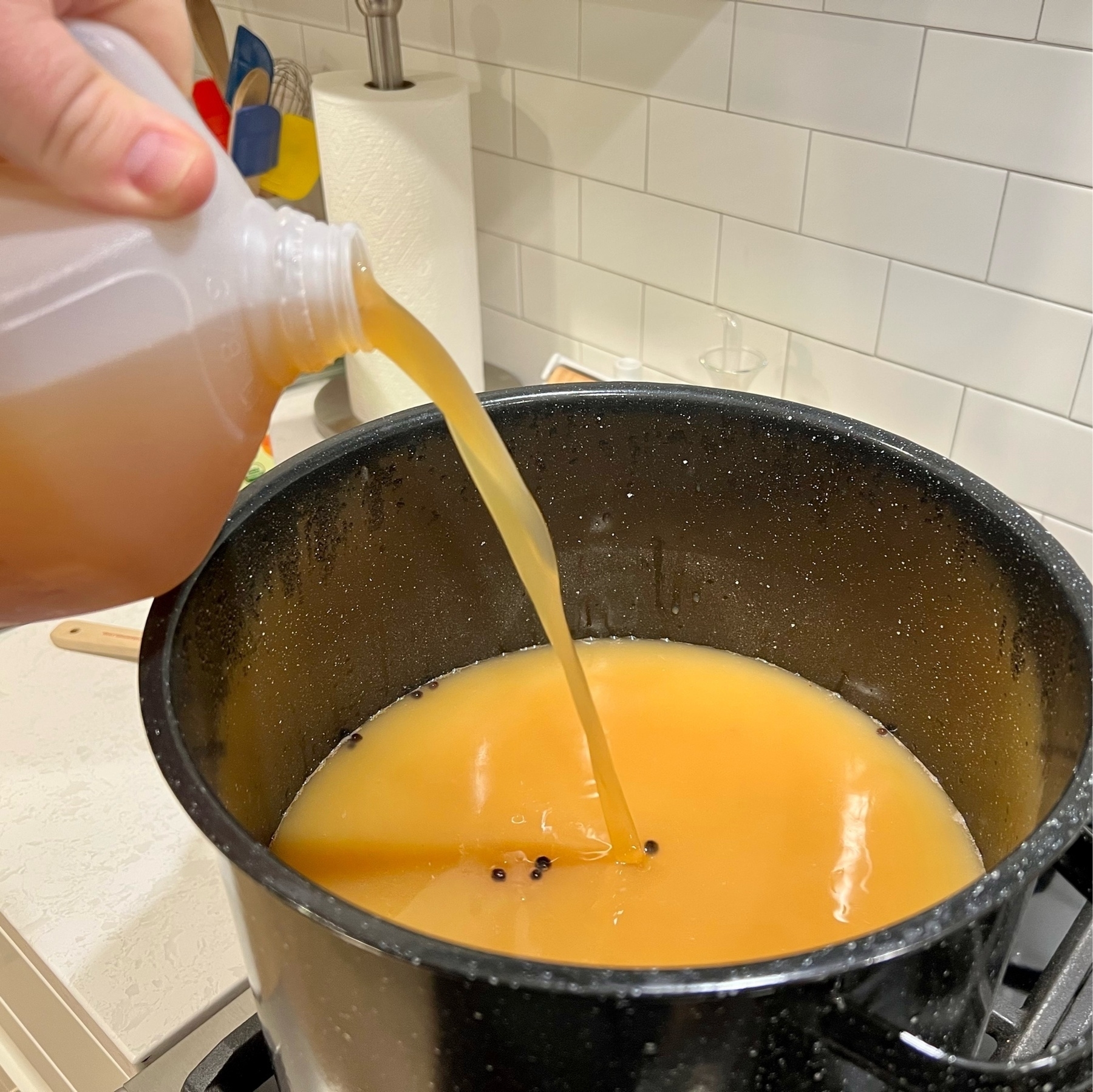
Making Wassail Tea means that it is officially the beginning of the holiday season for us!
Four Thousand Weeks as Rings
I’ve been reading Four Thousand Weeks: Time Management for Mortals by Oliver Burkeman. The title comes from the fact that if you live to be 80, you’ll have had about 4,000 weeks. Technically it is 4,174 but that wouldn’t make a very good title for the book.
I’m still just in the beginning of the book but as I pondered his focus on the finitude of our time, I couldn’t help but think of how to visualize this! I knew Shortcuts could do the math for me, and then I realized Charty could do the visualization.

- The innermost ring (red) is the current week. It will fill up each day and reset at the end of each week. This ring will fill 52 times for each time the middle ring fills.
- The middle ring (yellow) is the weeks until your next birthday. This ring will fill 80 times until the outermost ring is filled.
- The outermost ring (green) is the weeks you have lived thus far. Hopefully we even overfill this ring.
It strikes me as an interesting visualization. Something to ponder. 🤔
However, I showed it to my family and they didn’t care for it much at all. The common theme seemed to be that “filling ones rings” is seen as a goal, something to look forward to, and filling these rings didn’t seem like a thing to look forward to. 😇
This post is part of the Shortcuts Collection.
Faribault Woolen Mill Tour
We took the tour of the Faribault Woolen Mill today. We learned a ton of interesting things about milling wool as well as the fact that Faribault Mills is the only fully vertical woolen mill in the United States. They have been operating at this location for over 150 years, founded in 1865! The mill is entirely mechanical, almost nothing digital. There are 22 steps that the wool goes from the 800 lb bales to a final product. All happening right there in this one mill.
The mill wasn’t running when we toured so we were able to wander a tiny bit more, and touch the wool at various stages. I would love to go back and do the tour when the mill is in full swing to see everything operating.
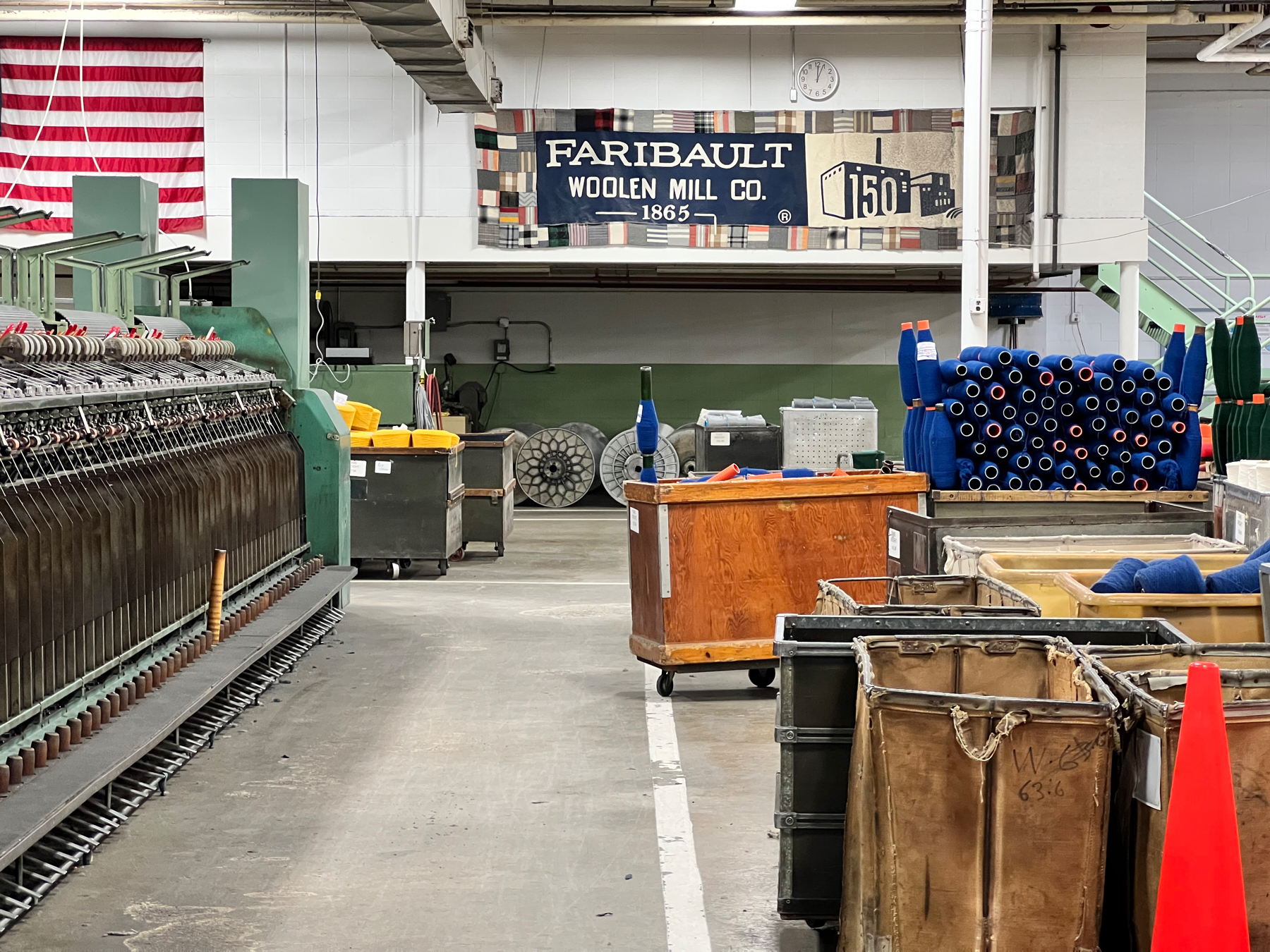 _Faribault Woolen Mill banner celebrating 150 years._
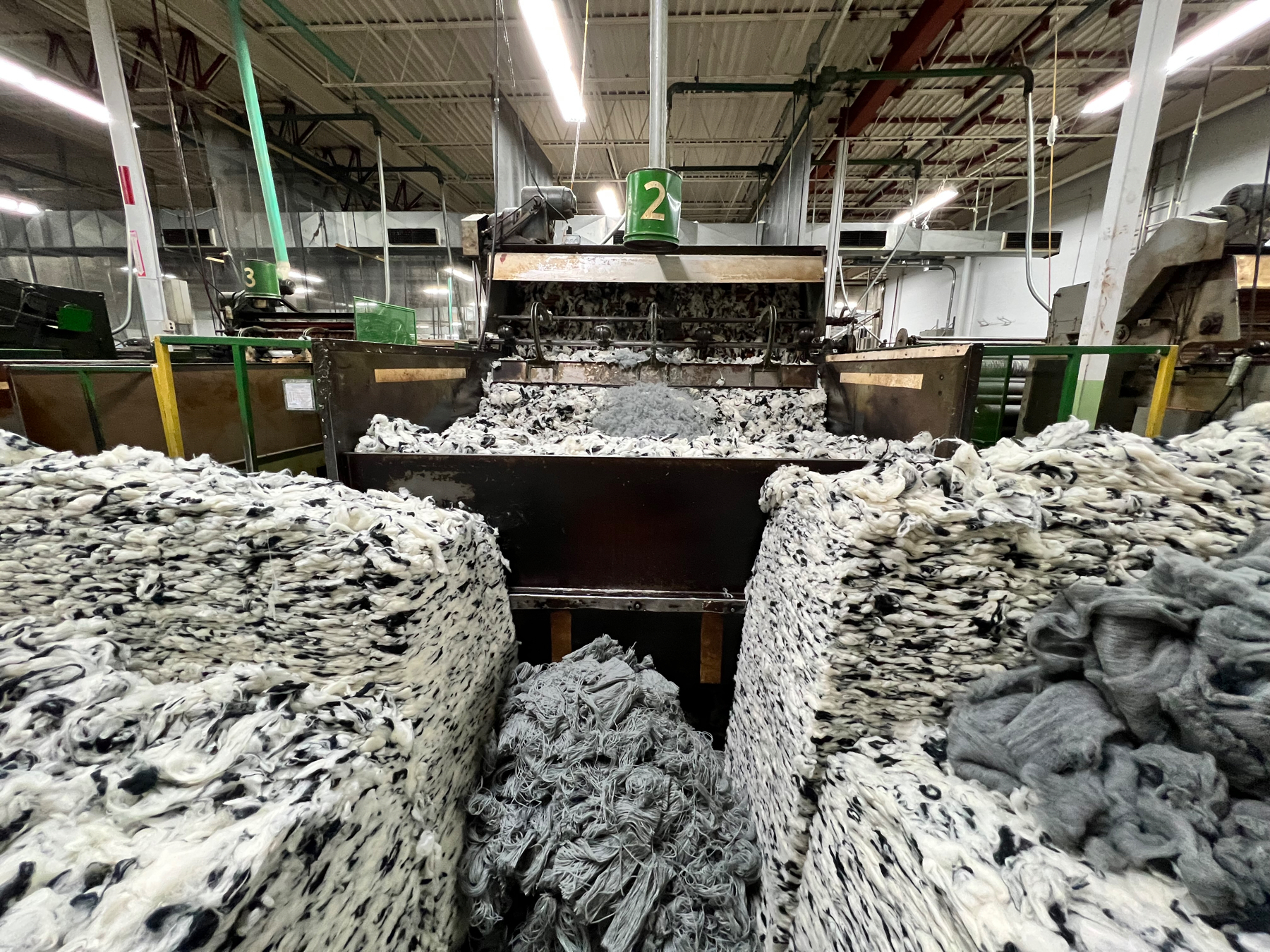 _One of the Carding machines taking the wool directly from the bales and aligning all of the strands into something that can be yarned._
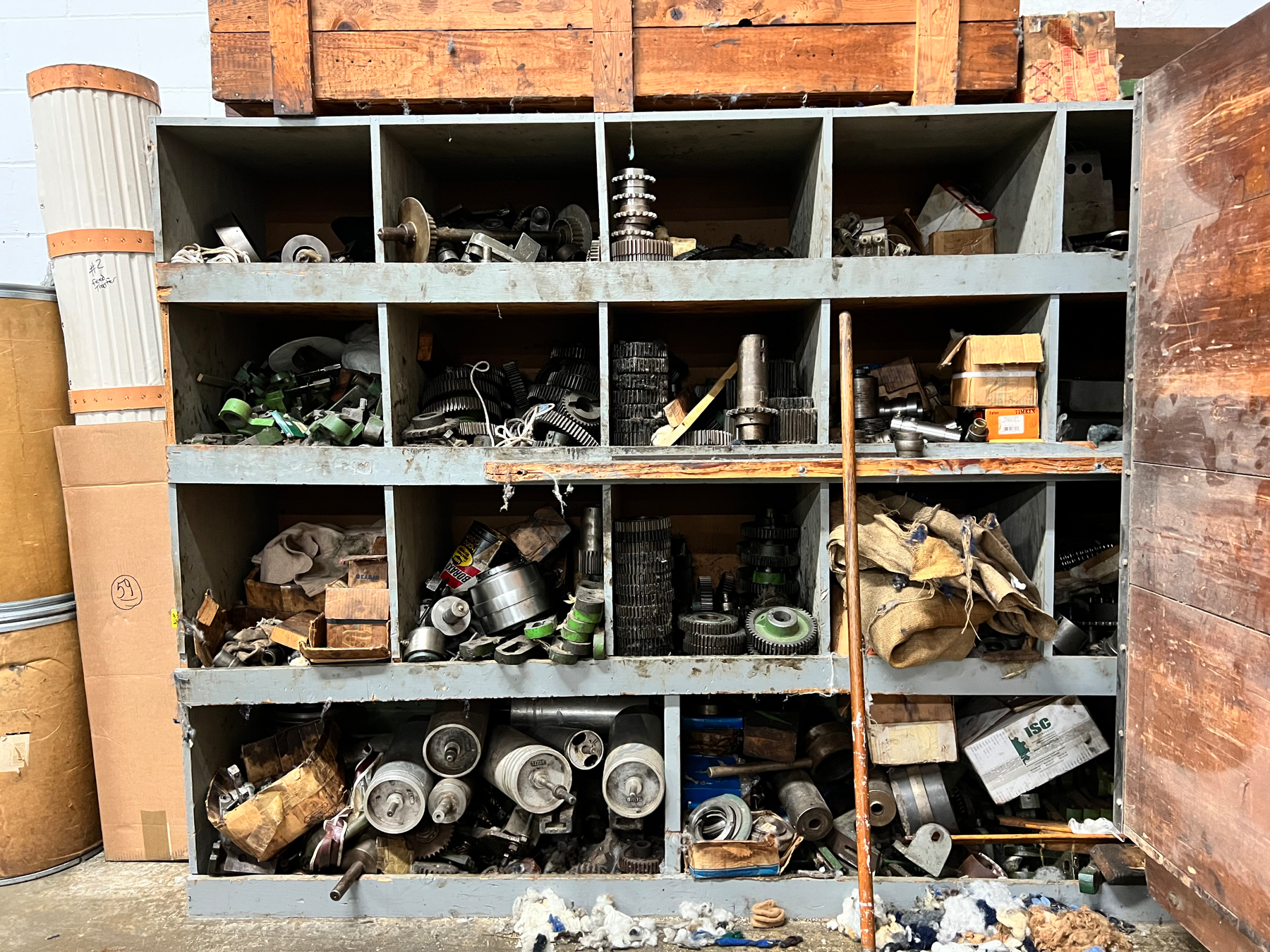 _Many of the machines were manufactured 100 years ago and are no longer made so there are parts stored in various places for repairs._
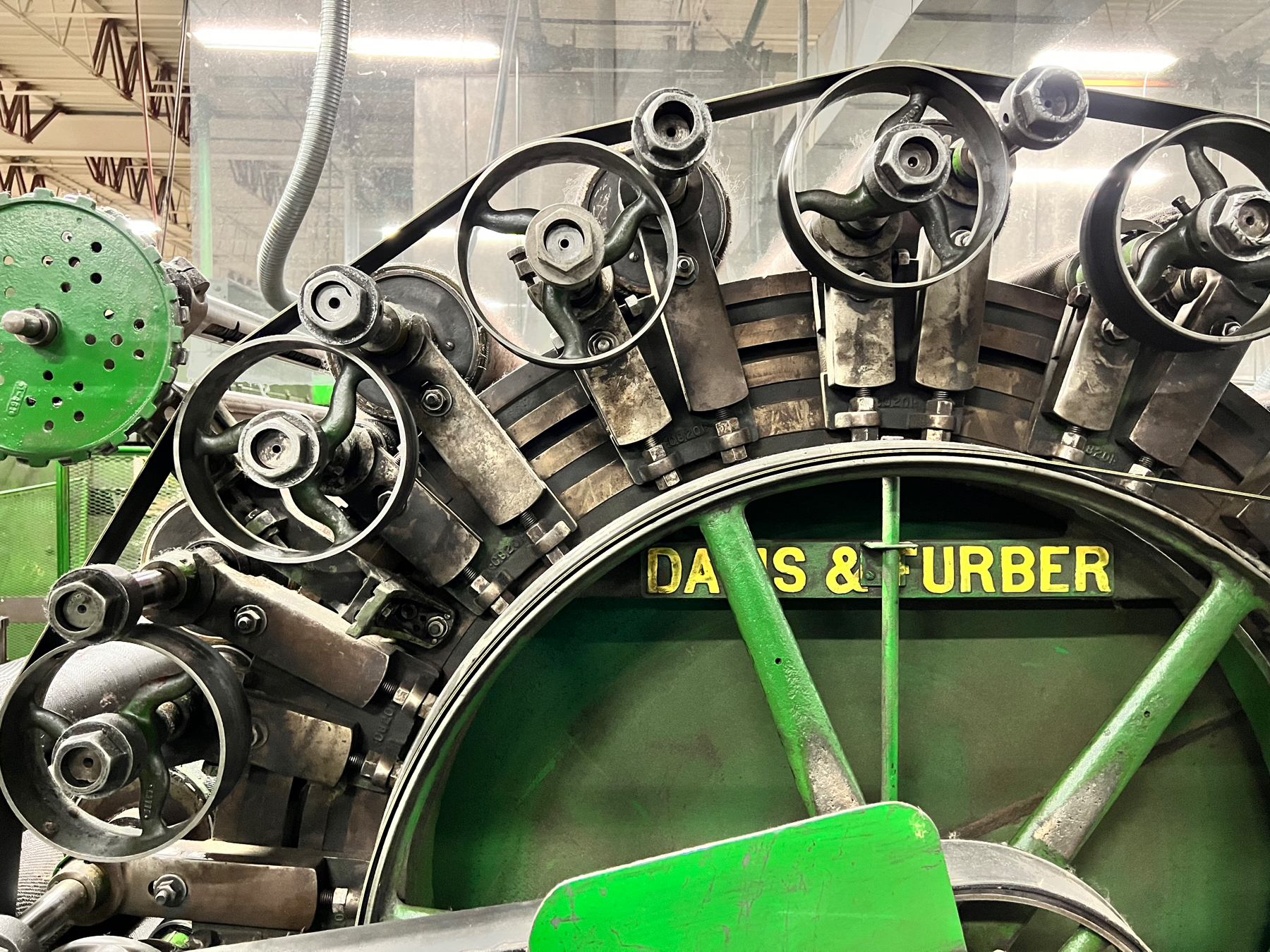 _A step in the Carding machine._
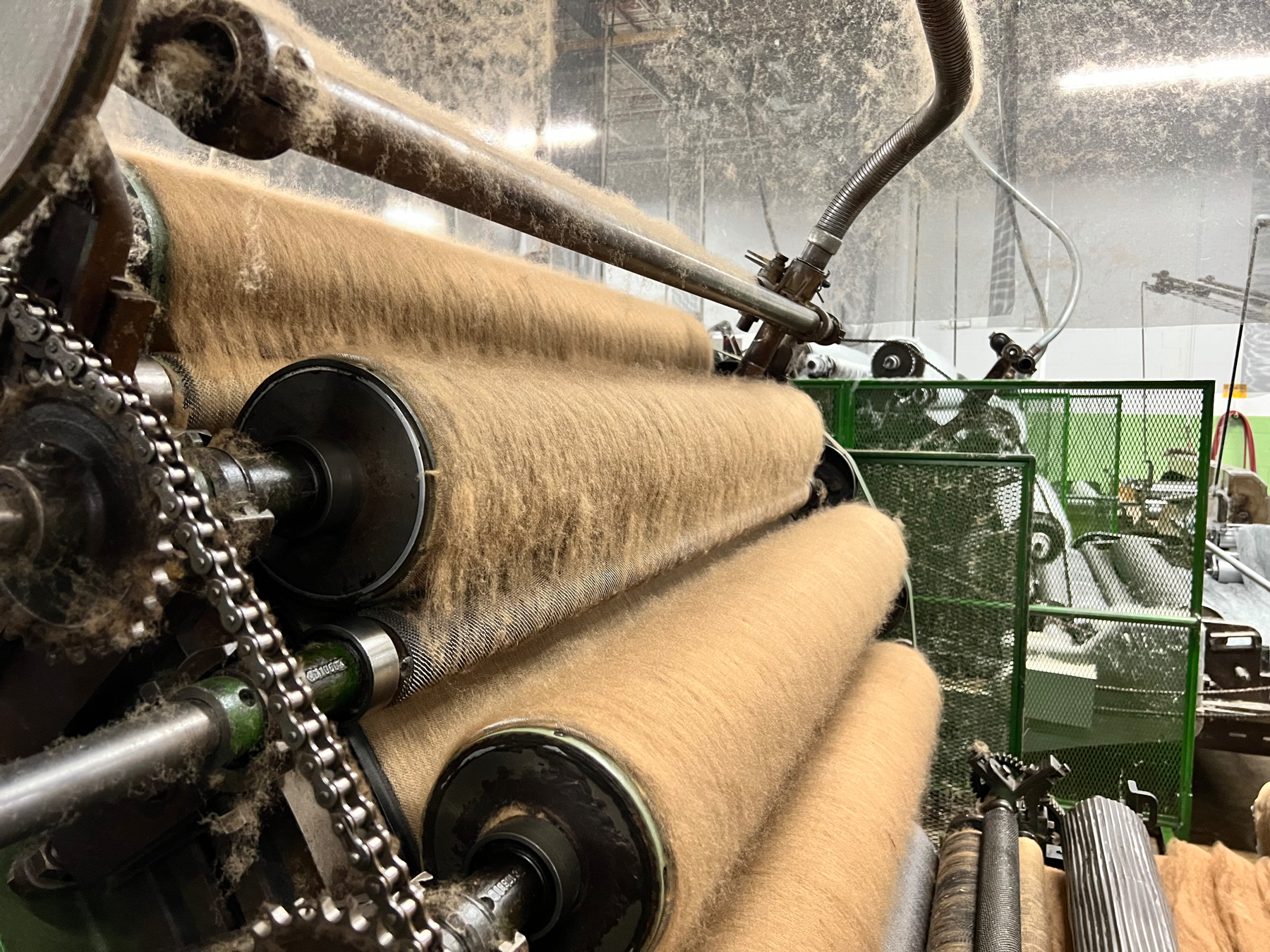 _You can see the strands of wool on the Carding machine._
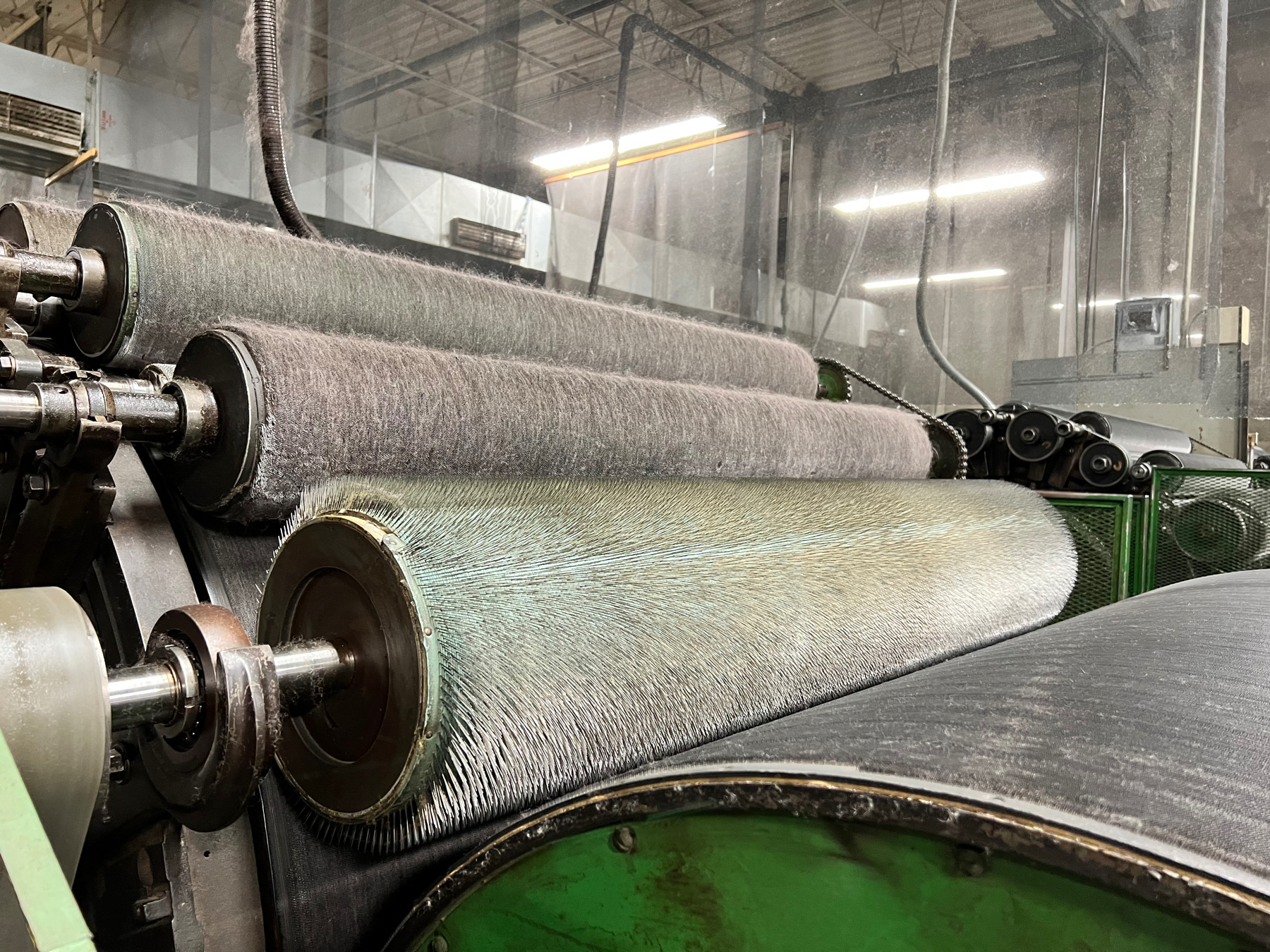 _The same pins and needles section of the Carding machine free of wool._
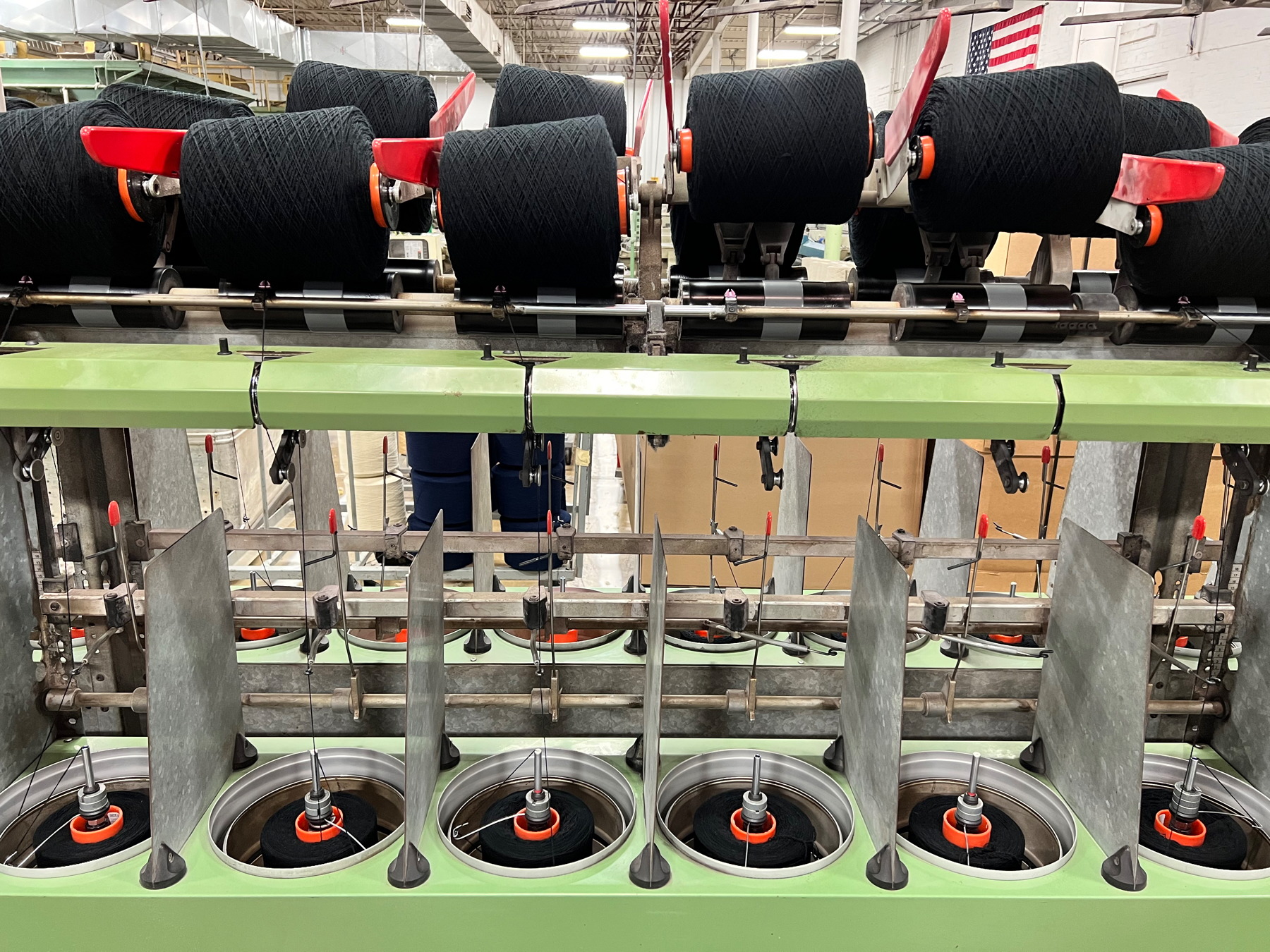 _Yarning machine that is taking single yarns and making double or triples._
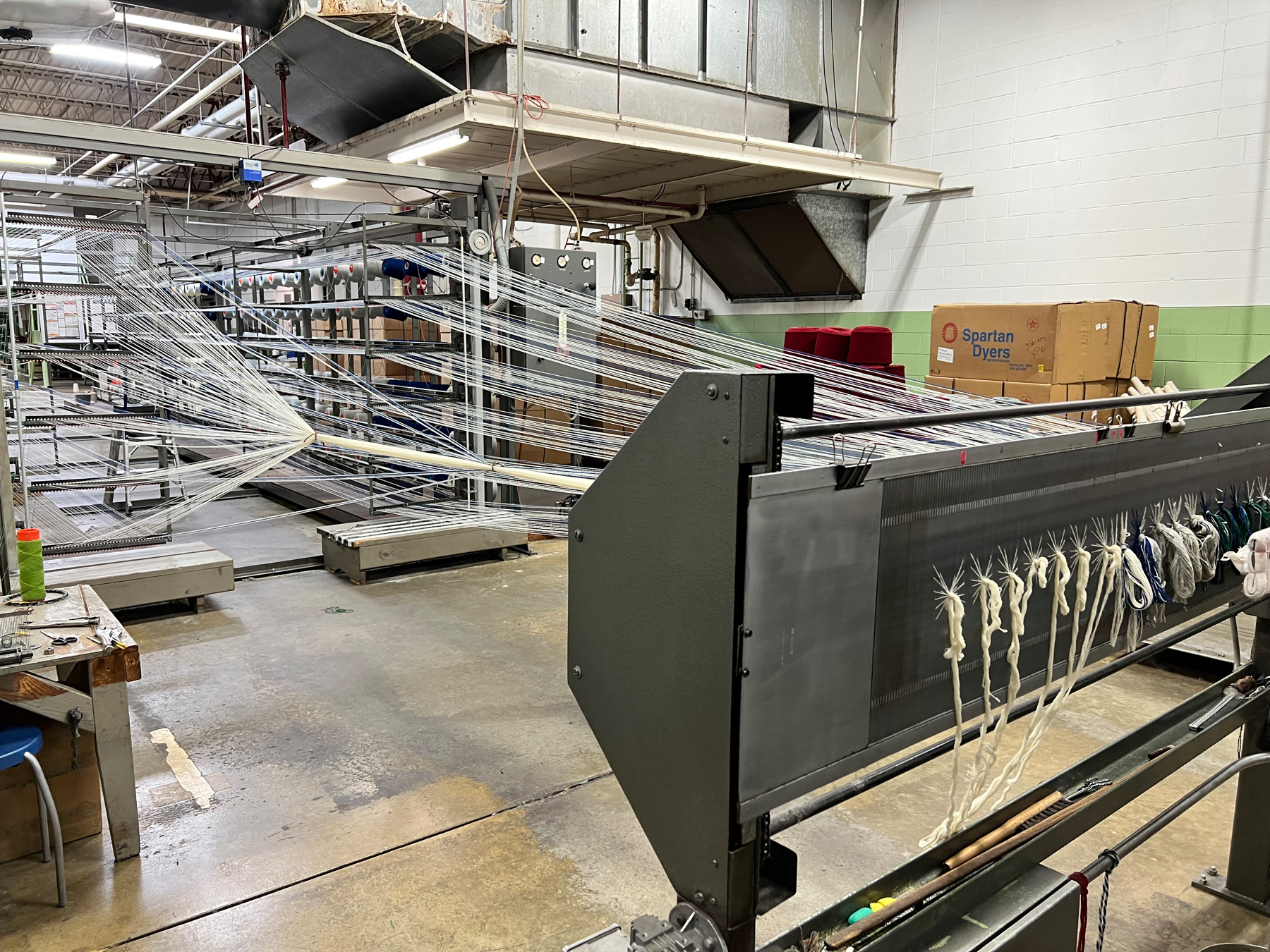 _This giant Warper machine takes a hundred or more spools of yarn and turns it into woolen fabric. It takes up to 2 days just to spool the yarns correctly._
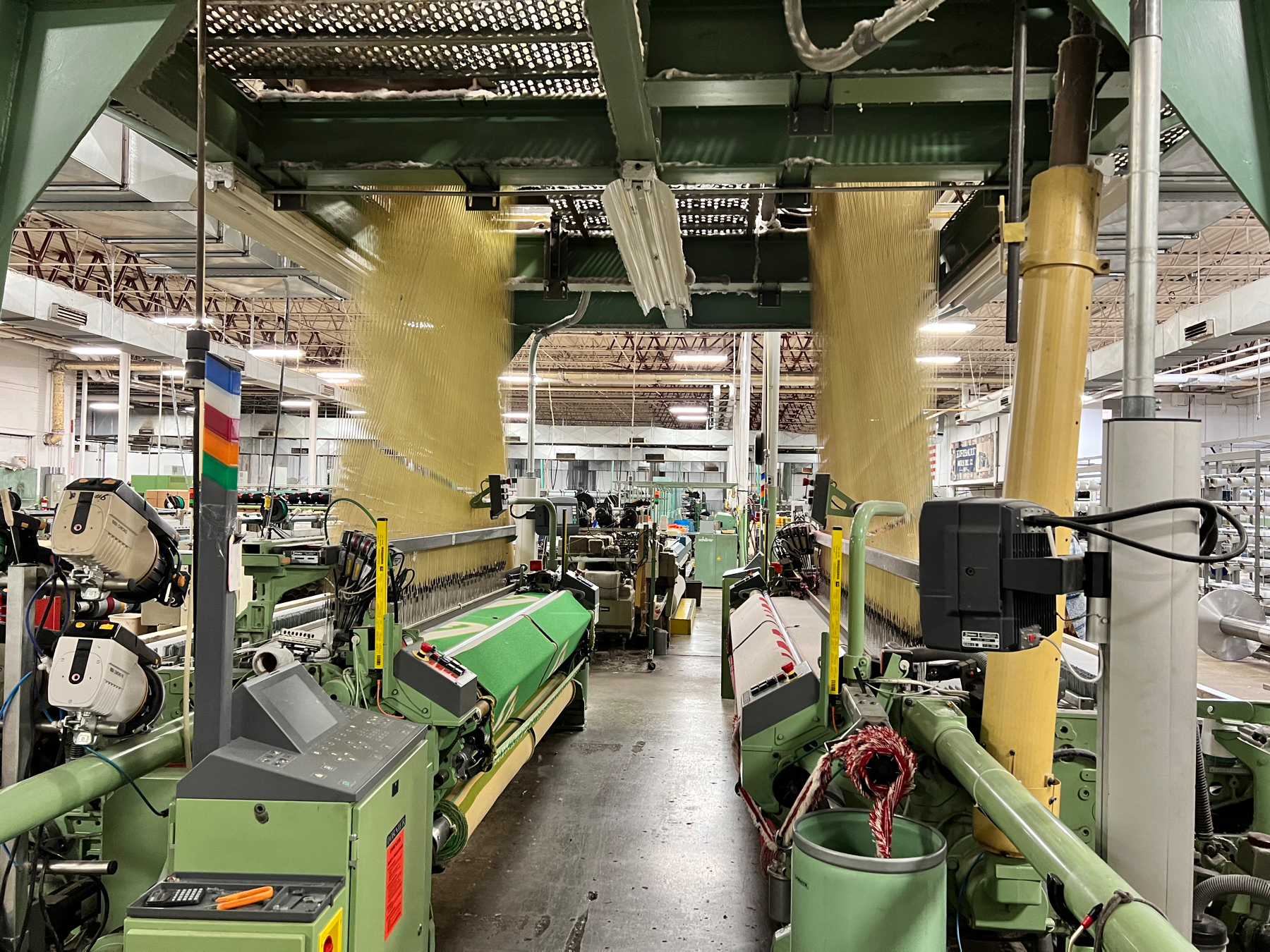 _Another Warper machine that can do significantly more complicated patterns._
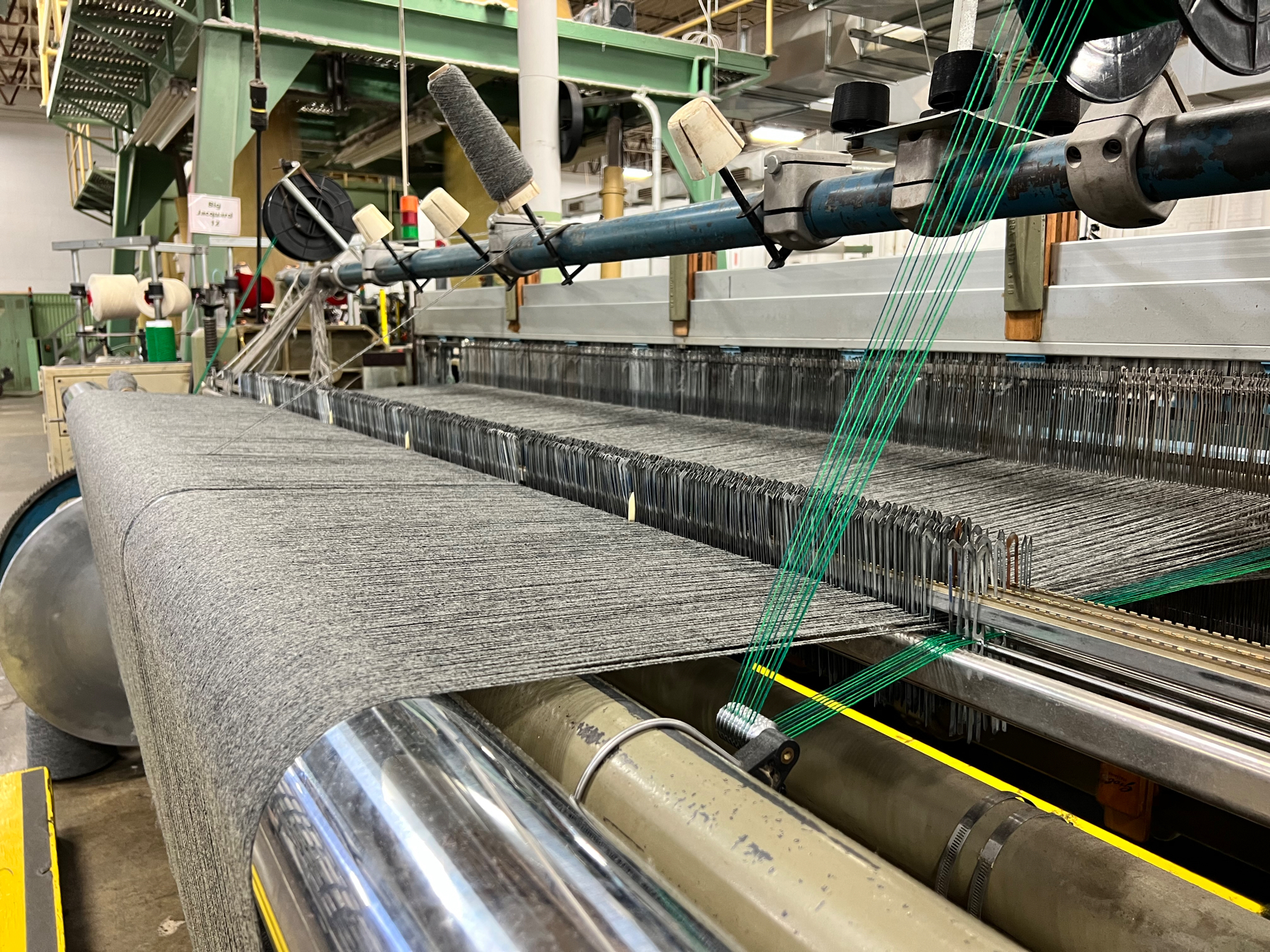 _Multiple yarns of wool coming together._
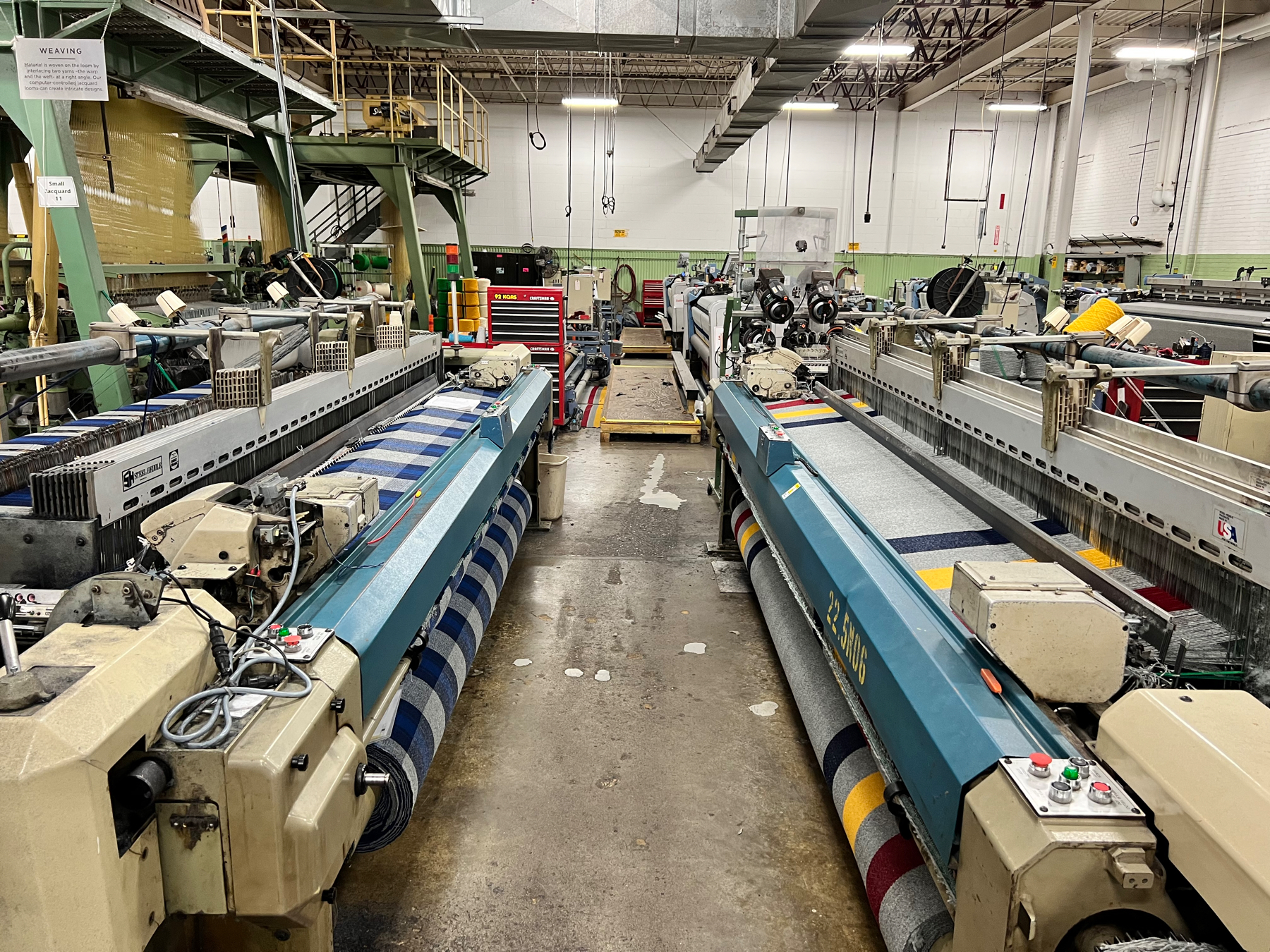 _Woolen blankets being assembled._
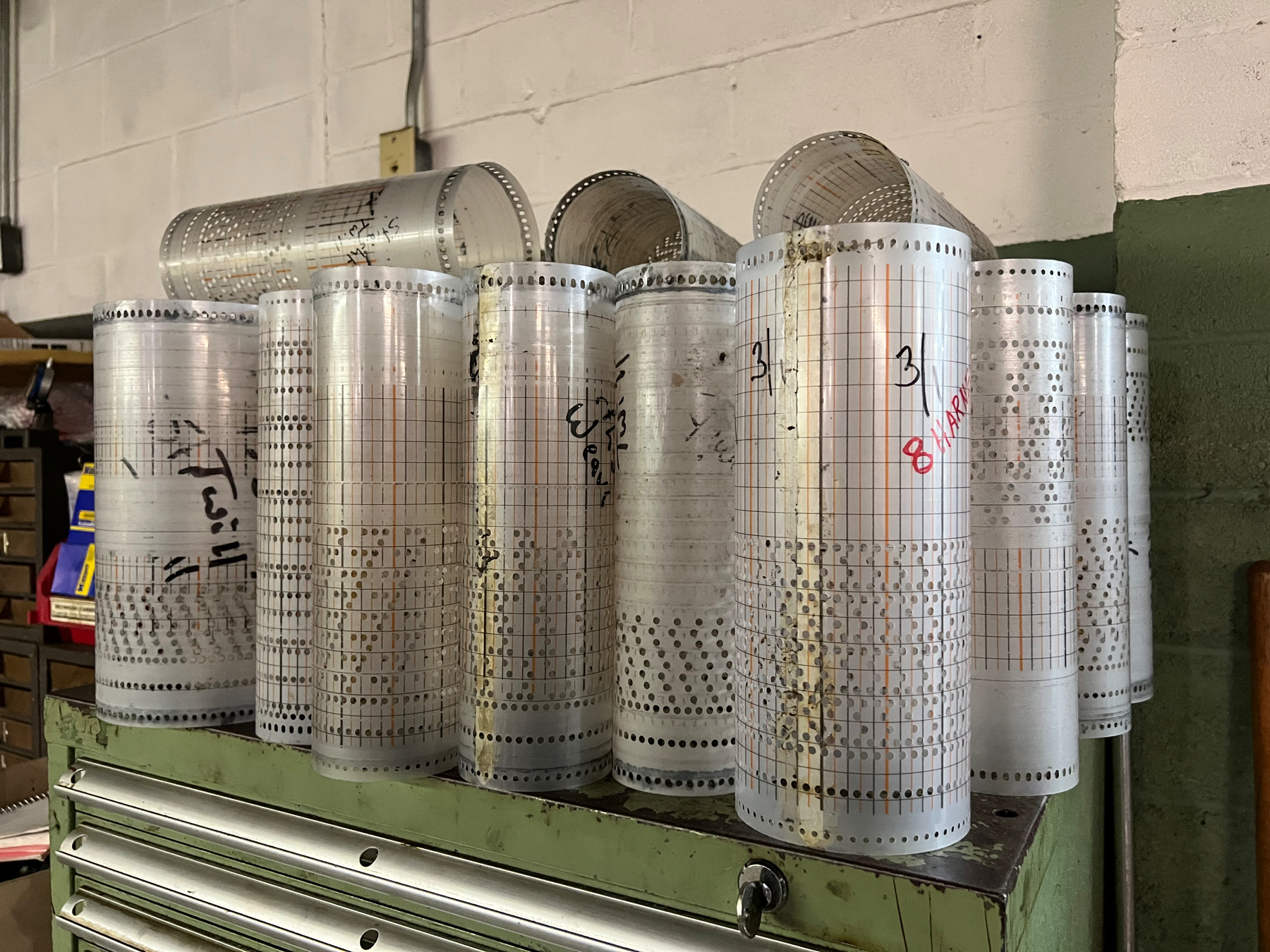 _These are "programs" that the Warper machines can use to create different patterns. They are very similar to what a player piano would have used._
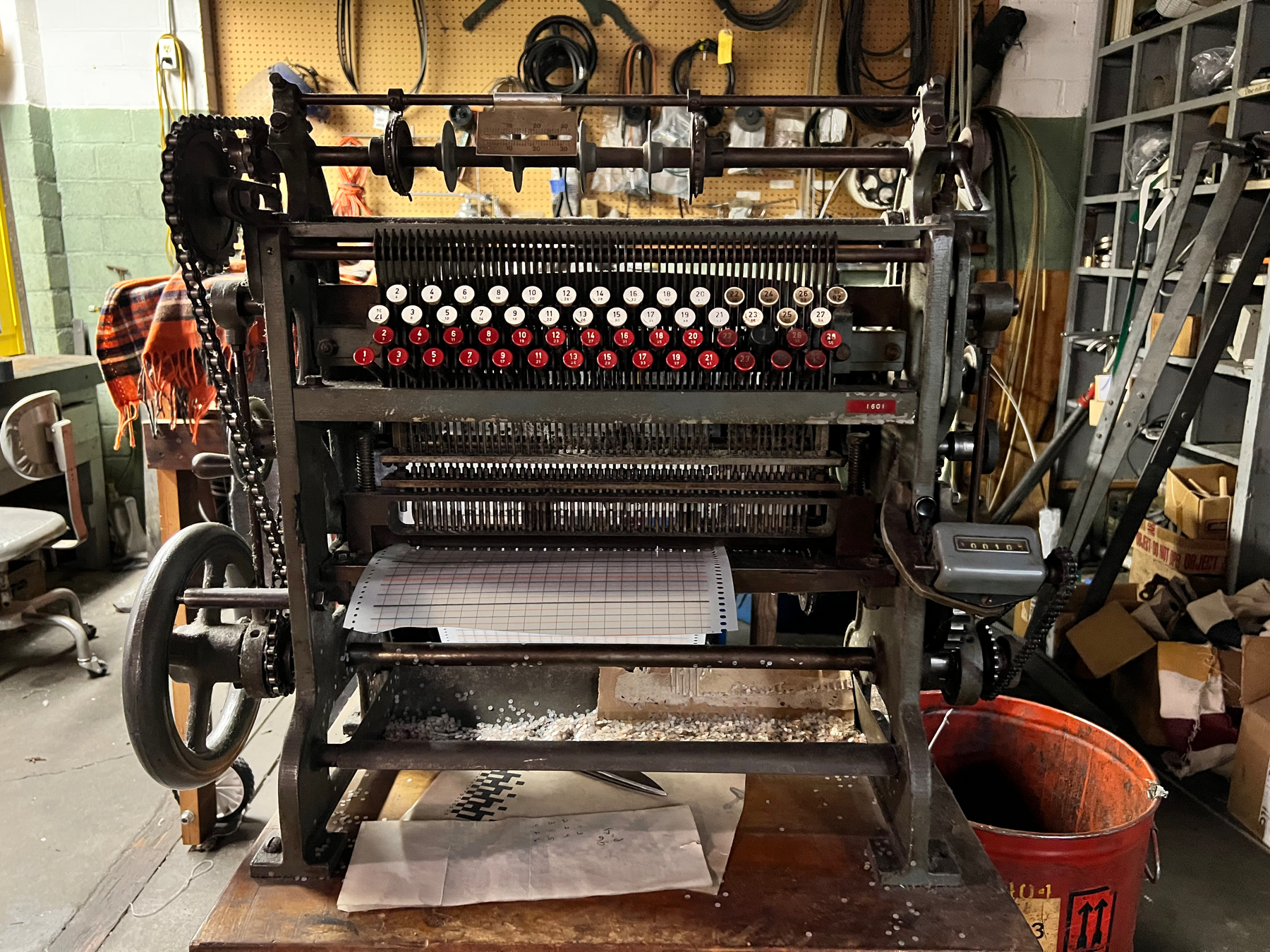 _This is the "computer" that can create the "program" sheets for the Warper machine. There is nothing computer about it beyond the typewriter keys._
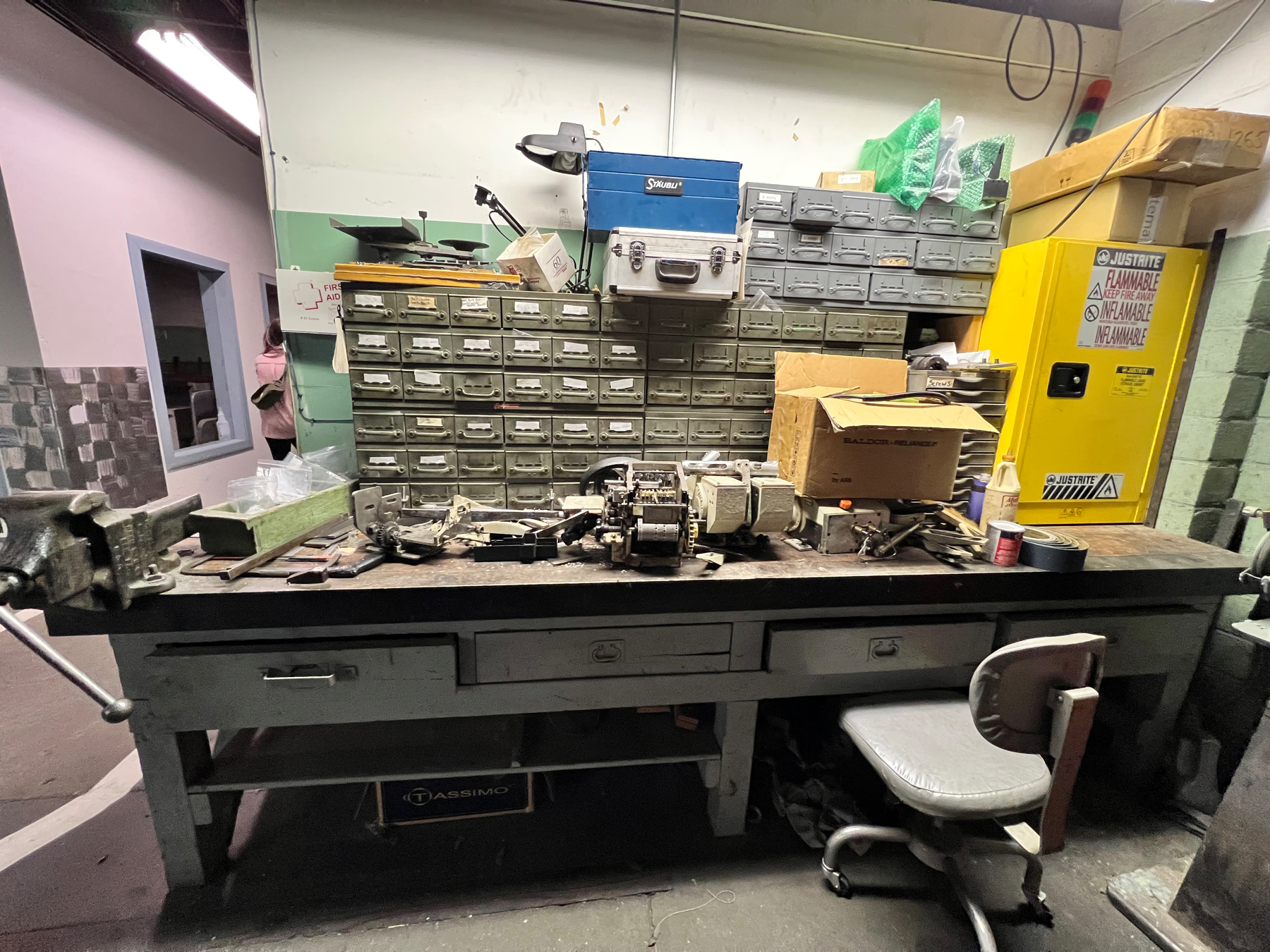 _Workbench for the Warper programming and designing._
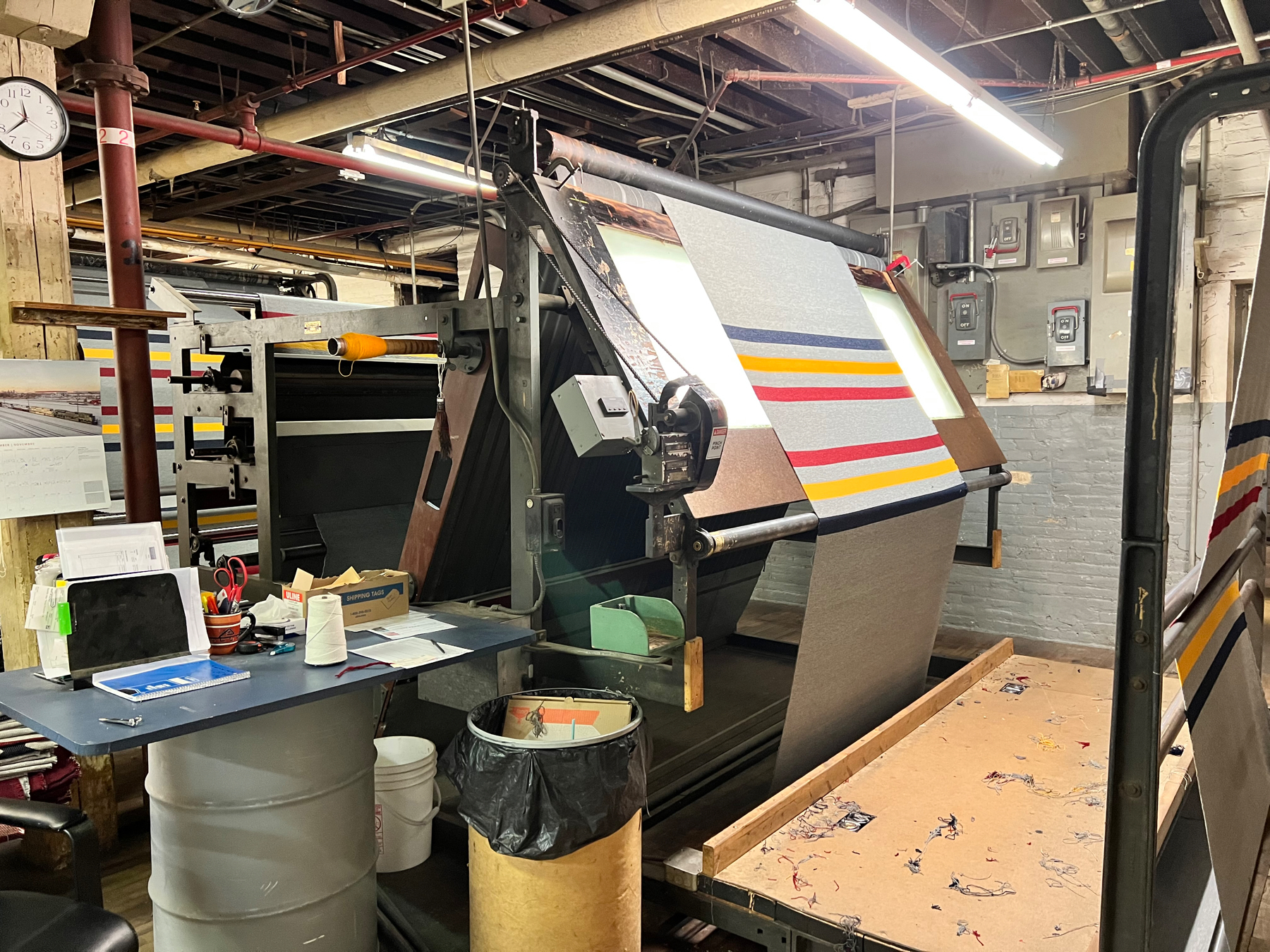 _Inspection station that all wool produced in the mill goes through. The light allows inspection to make sure there are no defects._
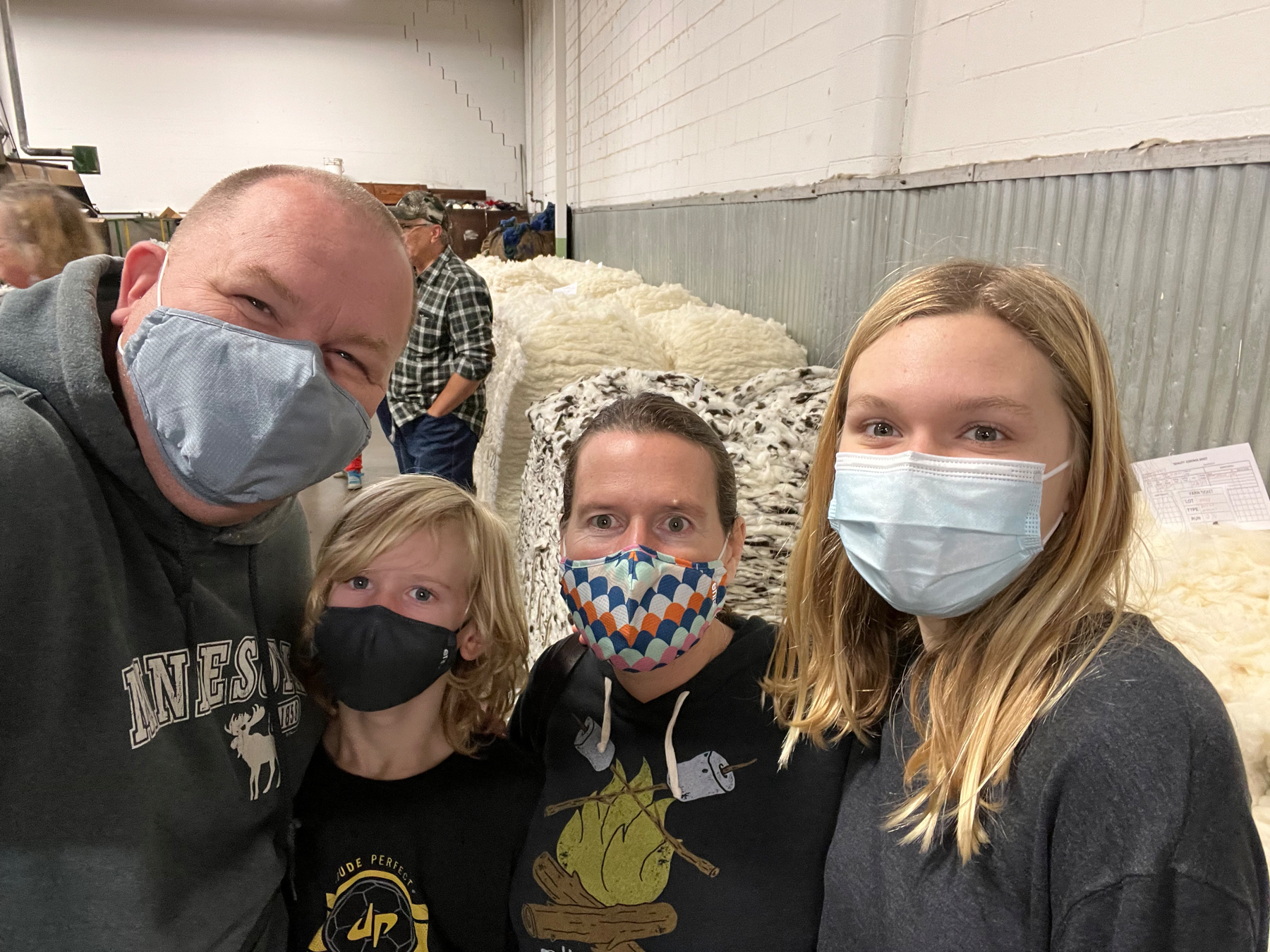 _Family selfie in front of multiple bales of wool._
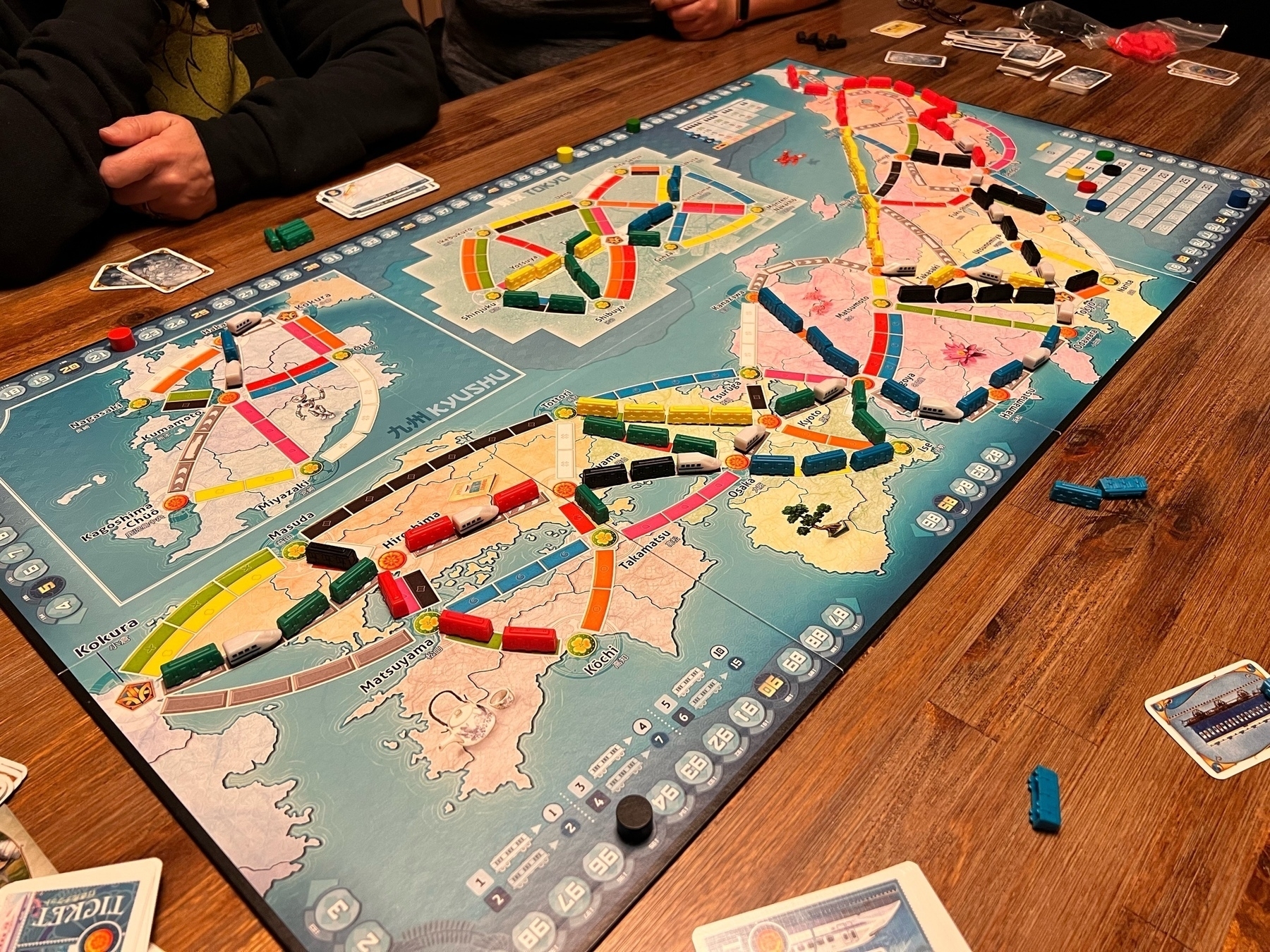
Tyler and I played as a team and came in 2nd in Ticket to Ride Japan. It is a fun variant with the community bullet train encouraging some cooperative play.
The two most important ingredients when making lasagna are:
- Italian Opera
- Love ❤️
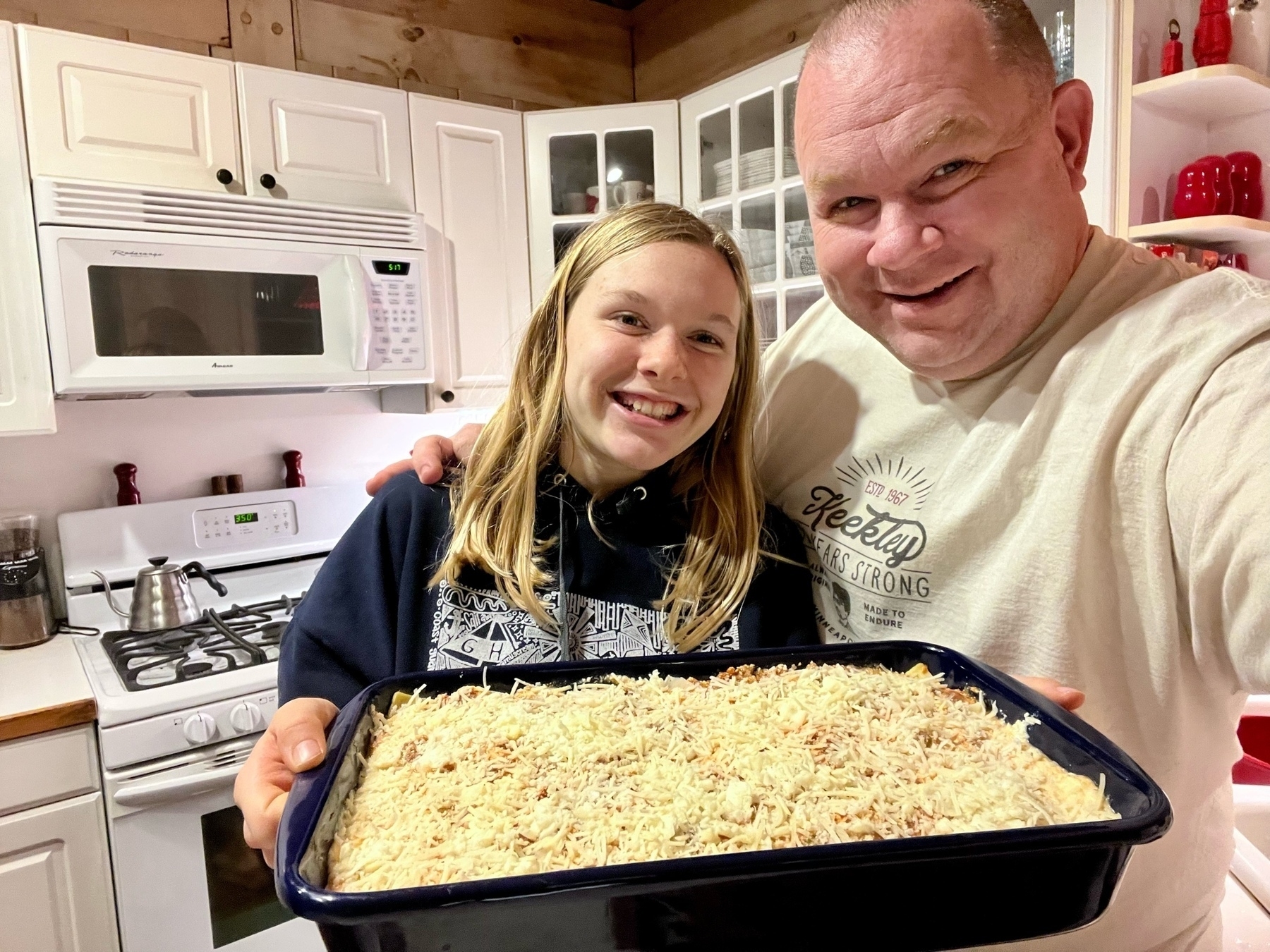
Mazie and I made this pan with plenty of love, and the Three Tenors accompanying us!

Tammy and I at Keepsake Cidery enjoying a crisp fall day.

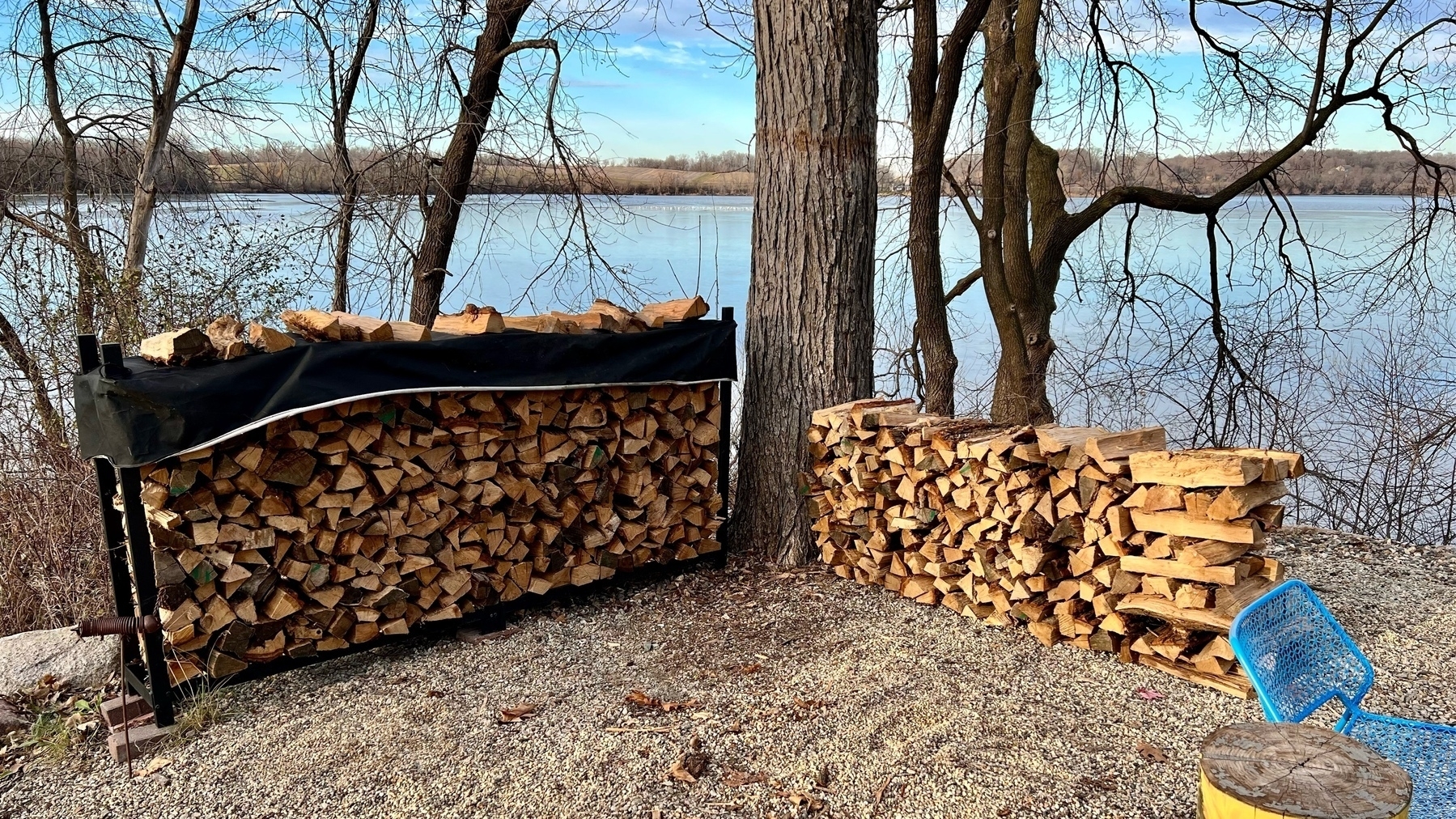
Firewood delivery moved and stacked. 🔥
POAP 2759387 at ConstitutionDAO Contributor.